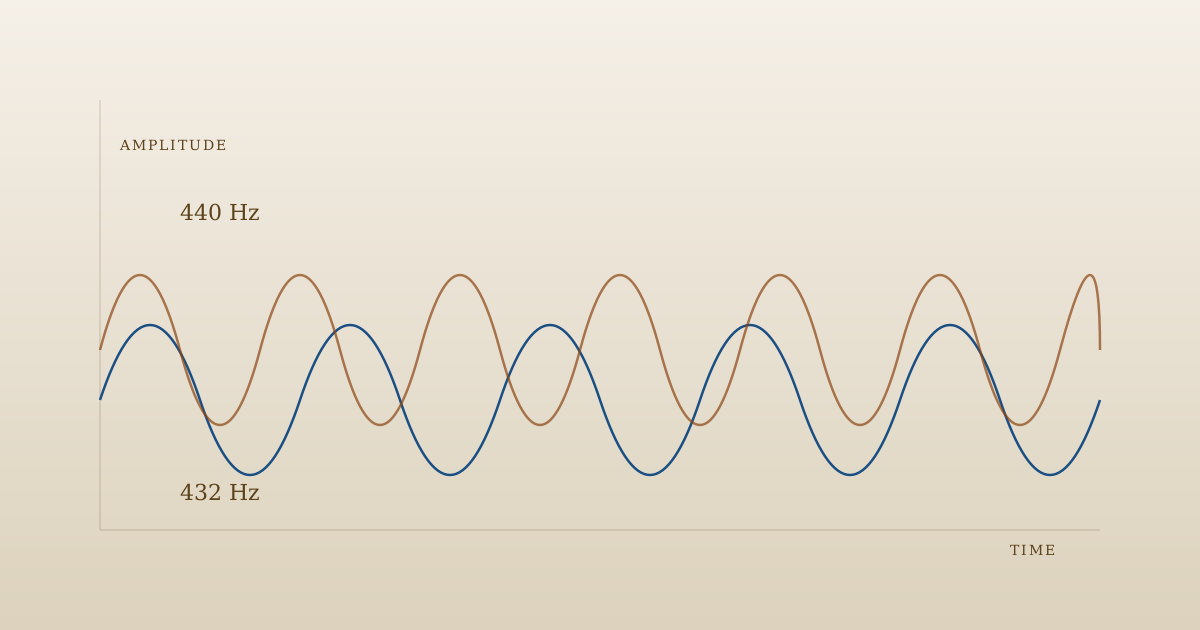

For a long time, I filed 432 Hz into the same mental drawer as internet folklore. Not malicious, exactly. Just sloppy. Big claims, weak proof, dramatic thumbnails, and a flood of comments from people who already wanted to believe.
So when someone sent me another “you need to try this” link, I did what skeptical people usually do: I clicked around for five minutes, heard nothing convincing, and moved on.
The problem was that I was not really testing anything. I was comparing random uploads from random channels, usually with different production choices. One sounded brighter. One sounded duller. One seemed louder. None of that told me whether the tuning reference itself made any difference to me.
Later, while reporting on how these claims spread online, I tried a cleaner experiment. I used one song I knew well. I kept the playback setup the same. I used a retuning tool instead of another anonymous upload. That was the first time the exercise felt honest.
I still would not describe the result in mystical language. Nothing “activated.” No hidden doorway opened. What changed was simpler: the listening experience stopped feeling hypothetical. I could hear the relationship between versions because I was finally comparing like with like.
That also changed my opinion of the products in this space. I had assumed the useful product would be a catalog of already-retuned music. Now I think the more trustworthy product is the tool that lets you test your own music with control. It is less glamorous, but much more defensible.
If you are arriving here from a native ad and wondering whether this is another overcooked claim, that skepticism is probably healthy. Keep it. Just aim it at the right target. Be skeptical of labels. Be skeptical of uploads. Then give yourself one fair test with a song you already know.
“Once I removed the randomness, the question got smaller and more useful: which version did I actually prefer?”
What changed in the test setup
- The same familiar song was used instead of two unrelated uploads.
- Playback volume stayed constant during the comparison.
- The retuned version came from a controlled tool rather than an anonymous channel.
YouTube Retuning Extension
We reference it when the article context is less about ownership and more about comparing recognizable songs already living online.
Start with a track you know well enough to notice small changes in feel, tension, or familiarity.Common reader questions
What if I do not notice a dramatic difference?
That is normal. The value of a good test is clarity, not forced conclusions. You may prefer one version slightly, strongly, or not at all.
Why start with YouTube?
For many readers, YouTube is the fastest way to test a song they already know without rebuilding an entire library.