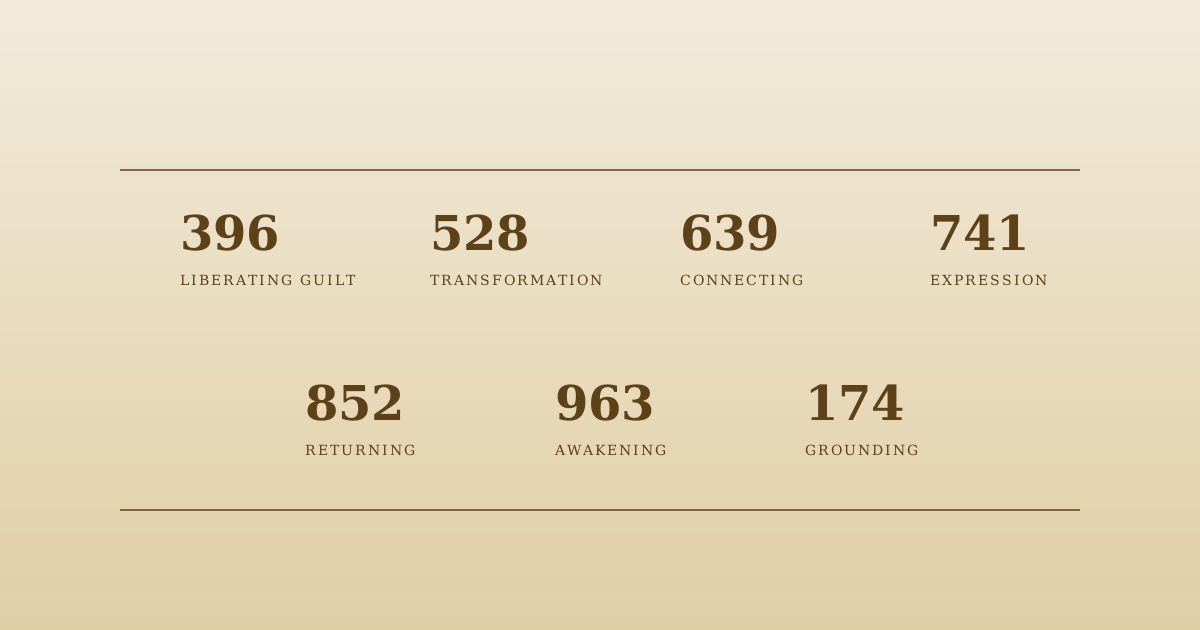
For most of my twenty years as a sound healing practitioner, I told clients that 528 Hz was special. I called it the “transformation frequency” or sometimes the “miracle tone.” I quoted the popular framing about DNA repair and emotional release. I used it in sessions because clients responded to it and because I believed what I had been told.
I have spent the last two years walking those claims back. This is the honest version of why.
Where the claims came from
The modern 528 Hz framing, including the “miracle tone” language and the DNA-repair claim, traces back to a small number of alternative health books published from the 1990s onward. The cited research, when it exists at all, does not support the specific claims being made. The claims are extrapolations, restatements, and chains of secondary citations that eventually loop back to themselves.
I knew this in a vague way for years. I did not look closely because the framework was working in my sessions. Clients found it meaningful. They came back. I did not have an obvious reason to question what I was saying.
That is itself a problem. It is the same problem that lets bad ideas survive in any field: a working incentive structure is not the same as a true claim.
What changed
Two things happened in late 2023 that pushed me to look more honestly.
First, I started running an informal test. I would play sessions where I told clients the frequency, and sessions where I did not. Their reported experiences were similar across both conditions. The frequency label was not doing the work I had assumed it was.
Second, a colleague I respect quietly stopped using the “miracle tone” language in her sessions. When I asked her about it, she said she had spent six months reading the actual studies behind the claims and could not in good conscience keep repeating language she could no longer support. Her honesty gave me permission to do the same.
What I tell clients now
I still play 528 Hz tracks in some sessions. The character of the recordings is pleasant, and many clients have associated the tone with their own practice over years. I do not introduce the frequency as a cure for anything. I introduce it as music in a particular tuning.
When a new client asks me whether 528 Hz does what they have read it does, I tell them the truth: the historical claims are weaker than the marketing suggests, the specific medical effects are not supported by current research, and what they will experience in a session is closer to relaxation, ritual, and the social effect of being in a calm space with attention paid to them. All of that is real. None of it requires the specific frequency to be magical.
What I would say to my younger self
Verify before you teach. The wellness world, including the sound healing world, contains a lot of inherited claims that no one has personally checked. When a framing is working in your practice, that is not a reason to skip the verification step. It is the reason you owe it most.
I was not lying to my clients. I was repeating what I had been taught, and I had not bothered to check. That is its own kind of problem.
A practical experiment for readers
If you have heard 528 Hz claims and want to test them for yourself, here is the honest experiment:
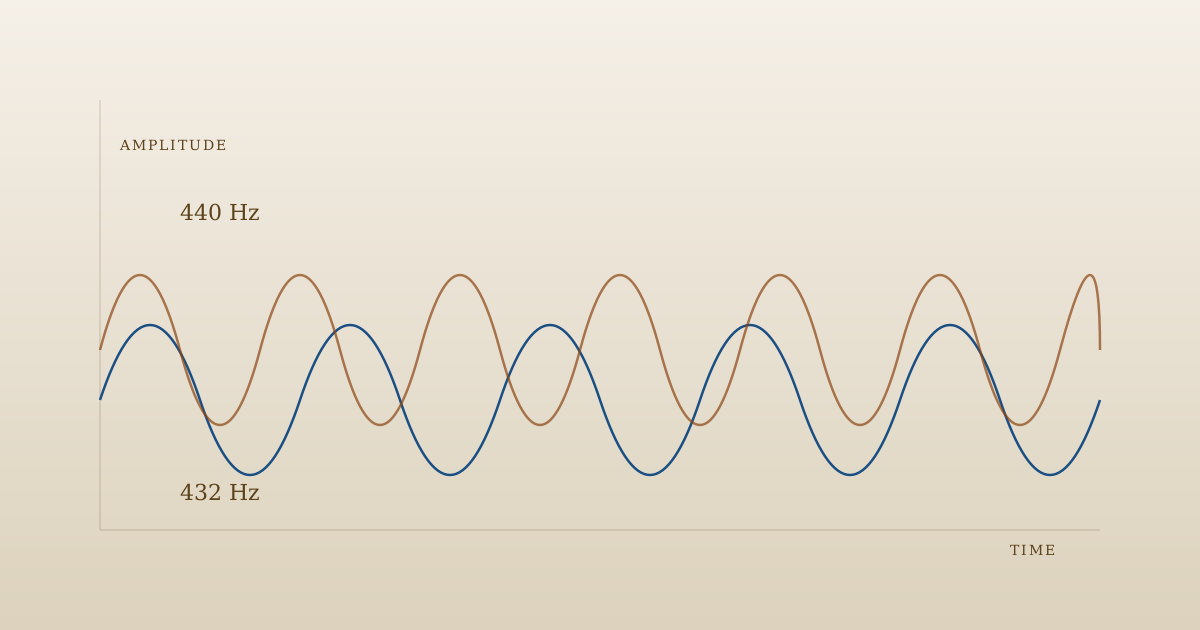
Take a piece of music you know well. Listen to it at standard tuning. Then listen to it retuned to 528 Hz, at the same volume, in the same environment. Notice your response. Try a different piece. Try another day. After a week of this, you will know more about your own listening than any marketing copy could tell you.
That kind of personal verification is what I should have been recommending all along. I am recommending it now, late but honestly.
“I was not lying to my clients. I was repeating what I had been taught and had not bothered to check. That is its own problem.”
What changed my mind
- Asking clients to verify their own listening rather than trust frequency labels exposed how much of the effect was placebo, ritual, and routine.
- Reading the actual research, rather than the secondary marketing summaries I had been quoting, made the gap between claim and evidence obvious.
- Watching colleagues quietly walk back similar claims gave me permission to do the same publicly.
- Clients respected the change once I explained it. Some thanked me for it.
RetunerPro
It appears in stories where local files and repeat listening matter more than trusting platform labels.
If you want to test the 528 Hz claim for yourself rather than trust any practitioner, a desktop retuning tool lets you compare familiar music under controlled conditions.Common reader questions
Are you saying 528 Hz does nothing?
No. I am saying the specific medical and emotional claims attached to it are not supported by evidence. People can find the recordings calming, meaningful, or beautiful. Those experiences are real. The mechanism is not what the marketing says it is.
Do you still play 528 Hz tracks in sessions?
Sometimes. I do not introduce them as a cure. I introduce them as music in a particular tuning that some clients find pleasant.
How did clients react when you changed what you said?
Most respected it. A few were surprised. None left my practice over it. Honesty turned out to be less risky than I had feared.