
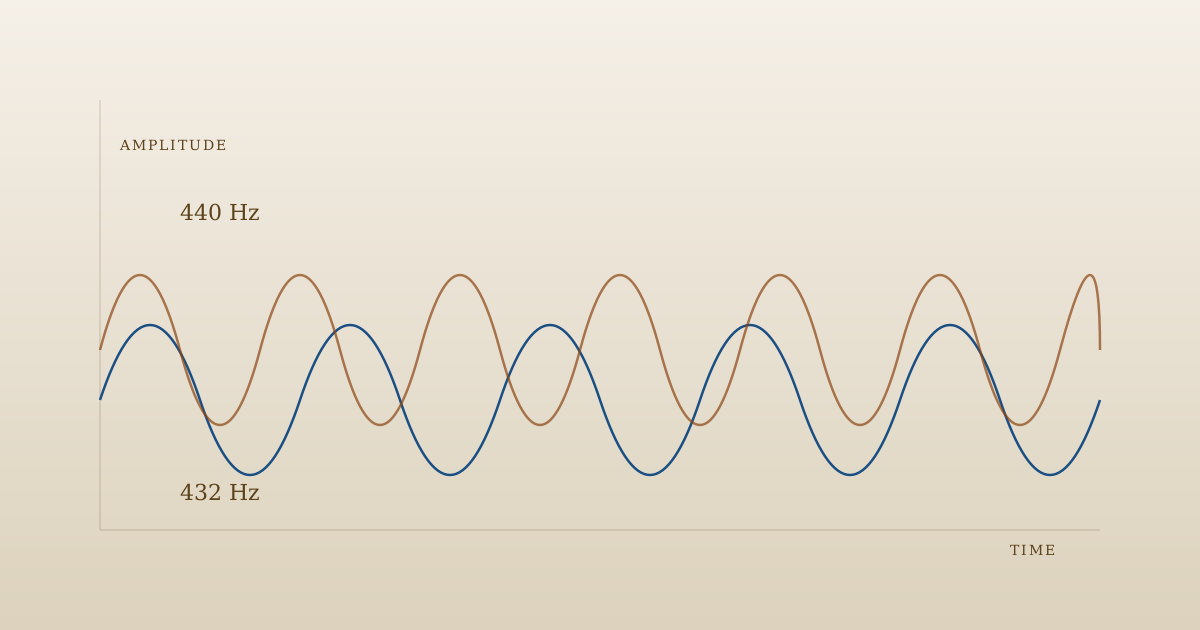
If you have tried 432 Hz music and thought it sounded a little different — slightly warmer, slightly softer, maybe a bit more relaxed — you probably heard something real. The explanation is simpler than the internet usually makes it.
The difference is audible
When music is retuned from 440 Hz to 432 Hz, every pitch shifts down by about 32 cents. That is roughly a third of a semitone — a small but measurable amount. Careful listeners can detect pitch shifts much smaller than this under controlled conditions.
So yes, you probably did hear a difference. The shift is not imaginary.
Why it often sounds warmer
Lower pitches tend to register as warmer, softer, or more relaxed to most listeners. This is a general property of human hearing and music perception, not something unique to 432 Hz. Any similar downshift would feel roughly comparable.
A few specific factors contribute:
- Bass notes sit slightly lower, which many listeners find comforting.
- High frequencies are slightly less piercing, so the recording feels gentler at any given volume.
- Overall tonal balance shifts toward the warmer end of the spectrum.
None of this requires a special theory. It is the same reason a piano played slightly below concert pitch feels a little more mellow than one played right on pitch.
Two other things are probably happening
A couple of non-tuning factors can also make retuned versions feel different from the originals:
- Different mastering. Some “432 Hz” tracks online are not simple pitch shifts — they have been reprocessed with different compression, EQ, or reverb. Those processing choices add to the perceived difference.
- Expectation effects. Listeners who put on a 432 Hz playlist expecting relaxation often experience relaxation. This is a real psychological effect, documented broadly in research on music listening (see the NIH’s National Center for Complementary and Integrative Health for general guidance on mind-body effects of music). [VERIFY: confirm NCCIH material covers expectation effects in music.]
Both are genuine. Neither proves anything about the frequency itself.
What this means
The honest framing is: the pitch shift is real, the perceptual effect is real, and the explanation is ordinary rather than mystical. That is a smaller, more accurate claim than the marketing usually makes, but it is also more defensible and more useful.
If you enjoy the sound of retuned music, that is a perfectly good reason to listen to it. Personal audio preference is legitimate — you do not need a larger theory to justify it.
How to hear it fairly
The cleanest way to notice the difference is to compare the same song, retuned, under identical playback conditions. When you isolate the variable, you can form a real opinion. When you compare two unrelated tracks from random uploads, you are just noticing differences in recording quality.
A retuning tool handles this for you — take a song you know, save it at 432 Hz, and compare on your own terms. That is a useful experiment, and it tells you more about your own listening than any marketing copy could.
RetunerPro
It appears in stories where local files and repeat listening matter more than trusting platform labels.
A retuning tool lets you compare familiar music at both tunings under identical conditions — the fairest way to decide what you actually prefer.Common reader questions
So the difference between 440 Hz and 432 Hz is real?
Yes — a shift of about 32 cents (a third of a semitone) is audible to most careful listeners under controlled conditions. Whether the shift is meaningful or pleasant is subjective.
Does hearing a difference mean the cosmic claims about 432 Hz are true?
No. A perceptible pitch shift does not validate claims about planetary resonance, DNA repair, or other medical effects. Those are separate claims that require separate evidence, which has not been established.
Why does retuned music sound warmer to some people?
Slightly lower pitches often register as subjectively warmer or softer to the ear. This is a general perceptual effect, not specific to 432 Hz — it would apply to any similar downshift.