
Binaural beats have become a familiar feature of sleep playlists, meditation apps, and wellness YouTube channels. If you have been curious, here is a grounded overview of what they are, what reputable health institutions say about them, and how to work them into a bedtime routine.
What binaural beats are
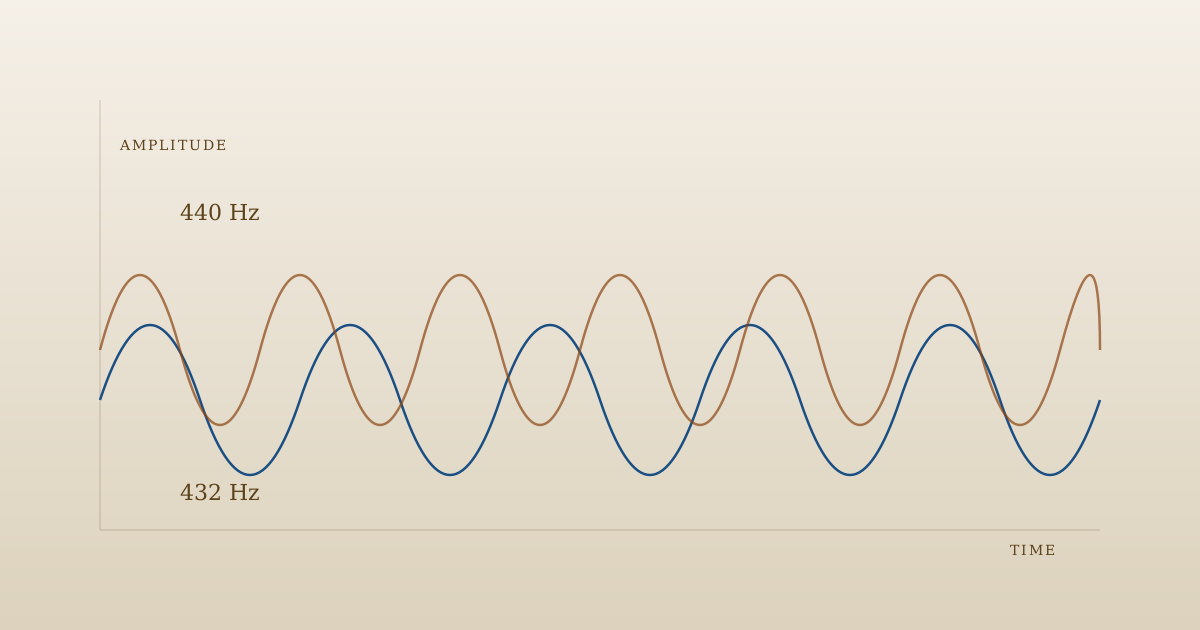
A binaural beat is created when you listen to two slightly different frequencies through stereo headphones — one in each ear. For example, if your left ear hears a steady 200 Hz tone and your right hears 204 Hz, your brain perceives a third “beat” at the difference: 4 Hz.
That perceived beat is the binaural element. The individual tones themselves are not unusual — it is the difference between them, and the way the brain processes that difference, that gives binaural beats their name.
Most sleep-oriented binaural tracks use small frequency gaps in what is called the delta range (under 4 Hz), which corresponds to the brainwave pattern observed during deep sleep.
What reputable sources say
For people interested in sleep broadly, the NIH’s National Heart, Lung, and Blood Institute offers general guidance on sleep hygiene and healthy sleep habits — what the research consistently supports as the foundation of good sleep.
On music and the body, the NIH’s National Center for Complementary and Integrative Health maintains a general overview of how music is used in wellness contexts. [VERIFY: confirm NCCIH pages cover binaural beats specifically.]
Specific clinical claims about binaural beats — for example, that they produce large measurable shifts in brainwave patterns during a single listening session — are less well-established in peer-reviewed research than the marketing often suggests. Many listeners find the recordings calming regardless of whether the specific frequency mechanism is doing the work.
The honest framing
The most straightforward way to think about binaural beats for sleep:
- They are a pleasant, calming listening experience for many people.
- Whether the specific frequency content produces unique effects beyond general relaxation is an open question.
- A bedtime listening routine — any calm, predictable audio — can support sleep onset through mechanisms that do not depend on any specific frequency.
If a binaural track helps you wind down, that is meaningful. Just keep in mind that the routine itself may be doing more work than the technical specifics.
How to incorporate them into a bedtime routine
If you want to try binaural beats:
- Use headphones. The effect depends on stereo separation. Speakers won’t produce true binaural perception.
- Start at a low volume. Calming audio works best when it fades into the background, not when it dominates your attention.
- Keep the listening time reasonable. Twenty to forty minutes before sleep is typical.
- Combine with good sleep hygiene. Cool, dark room. Consistent schedule. Limited screen time before bed.
- Don’t rely on them for medical-grade sleep problems. Persistent insomnia often has treatable causes. See a doctor if sleep is significantly disrupted.
A note on apps
There are many binaural beat apps available. Most offer preset frequencies labeled for different purposes (sleep, focus, relaxation). These presets are typically marketing categories more than medically validated interventions — the underlying audio is similar regardless of label.
A browser-based audio tool that lets you play and customize tracks — without a subscription or committed app — is often simpler and gives you more control over what you listen to.
The bottom line
Binaural beats are a popular wellness listening tool that many people enjoy. They are not a sleep treatment, not a medical intervention, and not a replacement for the basic sleep habits that research consistently supports. Used as part of a calming evening routine, many listeners find them pleasant and restorative. That is a reasonable place to leave it.
YouTube Retuning Extension
We reference it when the article context is less about ownership and more about comparing recognizable songs already living online.
A simple way to try binaural beats is through a browser-based audio tool — no app subscription required, and you stay in control of what you listen to.Common reader questions
What are binaural beats?
Binaural beats are created by playing two slightly different frequencies in each ear through headphones. The brain perceives the difference as a 'beat' at the frequency gap — for example, a 200 Hz tone in one ear and 204 Hz in the other creates a perceived 4 Hz beat.
Do they require headphones?
True binaural beats do require headphones, because the effect depends on each ear receiving a different frequency. Played through speakers, the audio mixes and the binaural effect does not occur in the same way.
Can binaural beats replace sleep medication?
No. Binaural beats are a listening aid that some people find calming as part of a bedtime routine. They are not a treatment for any sleep disorder and should not replace medical care.
Are they safe?
For most healthy adults listening at moderate volumes, binaural beats are generally considered low-risk. If you have a history of seizures or other neurological conditions, consult your doctor before trying any audio entrainment. [VERIFY: confirm specific medical guidance.]