If you have come across the term “sound healing” and wondered what it actually is, you are in good company. The term is used widely, sometimes inconsistently, and the range of practices it describes is broad. Here is a grounded introduction.
The short definition
Sound healing is a category of contemplative and wellness practices that use sound — music, tones, recorded audio, live instruments — to support relaxation, meditation, or general well-being. It is not a medical treatment and it is not regulated as one.
People who practice sound healing may:
- Attend group sound baths led by practitioners using singing bowls, gongs, or other instruments
- Listen to recorded sound bath tracks at home
- Use tuning forks as part of a personal meditation routine
- Play calming music as a wind-down before sleep
- Chant, tone, or sing as a personal practice
The breadth of the term is part of why it can feel confusing. There is no single thing called “sound healing” — there is a family of related practices.
Where it comes from
Practices that combine sound with contemplative or healing intention appear across many cultures and centuries. Examples include:
- Tibetan singing bowl traditions, which have roots in Buddhist practice (though the specific use of metal bowls in modern “sound healing” sessions is a more recent synthesis)
- Indian nada yoga traditions, which treat sound as a path for contemplation
- Gregorian chant and other religious vocal traditions, which use sustained tone as part of worship
- Indigenous drumming practices across many cultures, often tied to ceremony and community
- 20th-century alternative health movements, which popularized frequency-specific claims
Modern Western “sound healing” draws selectively from these sources and has developed its own conventions. Much of what is marketed as ancient is actually quite recent — this is not a criticism, just useful context for evaluating claims.
What the evidence supports
Peer-reviewed research on music and well-being is substantial. What is generally supported:
- Slow, calming music tends to have measurable relaxation effects on most listeners.
- Consistent listening routines can support sleep onset and stress reduction.
- Group experiences with sound (live performances, sound baths, group singing) have social and environmental effects that contribute to well-being beyond the audio itself.
The NIH’s National Center for Complementary and Integrative Health maintains a general overview of the research landscape. [VERIFY: confirm NCCIH page covers these topics.]
What is less well-supported:
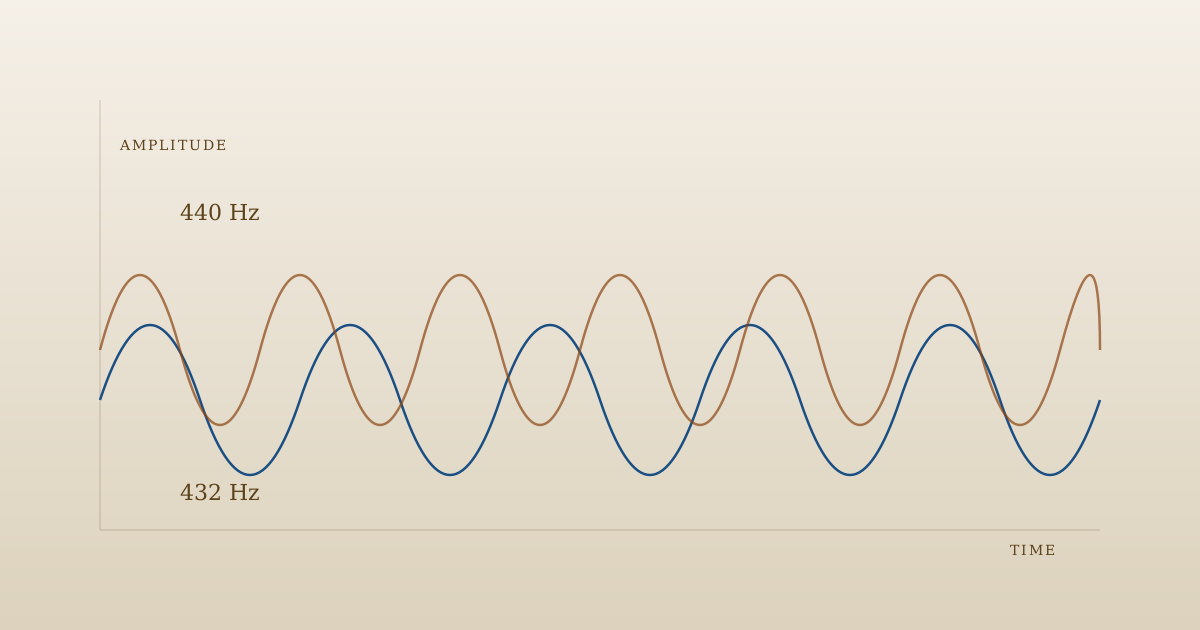
- Specific claims about individual frequencies producing specific medical outcomes
- Claims that sound healing can treat specific diseases or conditions
- Claims about effects on cellular structure, DNA, or “energy fields”
The honest framing is that sound-based practices can support relaxation and general wellness. They are not medical treatments. They are complementary practices, useful alongside — not instead of — conventional care.
Sound healing vs. music therapy
This distinction matters and is often blurred:
Music therapy is a clinical profession. Music therapists are credentialed (often through the American Music Therapy Association), work in hospitals and clinical settings, and provide licensed services with treatment plans, assessments, and documented outcomes. They are healthcare providers.
Sound healing is a broader wellness practice, not a licensed profession. Practitioners vary widely in training and approach. Sessions are wellness services, not clinical treatment.
Both can be valuable. They serve different purposes. If you are looking for help with a specific medical condition, music therapy is the regulated option. If you are looking for a relaxing wellness practice, sound healing may fit.
How people use sound healing today
Common applications, roughly from most to least evidence-supported:
- Relaxation and stress relief — a calm listening routine as part of daily life
- Sleep support — calming audio as part of a bedtime routine
- Meditation support — sound as an anchor for attention during contemplative practice
- Emotional processing — music as a companion during quiet reflection
- Community and ritual — group sound experiences in yoga studios, retreat centers, or wellness settings
Less well-supported but common framings:
- Chakra alignment, energy clearing, frequency-based healing claims
- Specific Solfeggio tones for specific emotional states
- DNA repair, cellular healing, quantum frequency effects
These framings are popular. They are not supported by peer-reviewed research. You can enjoy the practice without accepting the larger claims.
Starting your own practice
If you want to try sound healing for yourself, start small:
- Find a 20-minute window a few times a week.
- Play a calm recording you enjoy — a singing bowl track, ocean waves, or slow instrumental music.
- Sit or lie comfortably in a quiet space.
- Let your attention rest on the sound.
- Notice how you feel afterward — without forcing any particular outcome.
After a few weeks, you will have a sense of whether the practice fits you. If it does, you can explore further. If it doesn’t, you have learned something honest about your own preferences.
A final note
Sound healing is not a universal answer. It is a pleasant, accessible wellness practice that many people find calming and meaningful. Approached honestly — as a listening practice, not a medical intervention — it can be a real addition to a thoughtful wellness routine.
The simplest starting point is often what you already have: a comfortable chair, a quiet half hour, and a calming recording. Everything else is optional.
Common reader questions
Is sound healing the same as music therapy?
No. Music therapy is a clinical, licensed profession practiced by credentialed music therapists, often in medical settings. Sound healing is a broader wellness practice, not a medical profession, and its practitioners are not licensed healthcare providers. The two overlap in content but differ in regulation and scope.
Do I need special equipment to try sound healing?
No. Most beginning practices require only a quiet space, a way to play audio, and a comfortable place to sit or lie down. Many people start with recorded sound baths or simple background listening before adding any instruments.
Is there scientific evidence that it works?
The research on music and relaxation is generally supportive. Research on specific sound healing claims — particular frequencies, specific healing outcomes — is more limited and often preliminary. The honest framing is that calming listening practices can support relaxation as part of a broader wellness routine, without claiming specific medical effects.