Crystal singing bowls have become one of the most popular instruments in modern sound practice. You will find them in yoga studios, retreat centers, and sound bath sessions. If you are considering one for your own practice, here is an honest introduction.
What they actually are
A crystal singing bowl is a bowl made from fused quartz (silica) that produces a sustained tone when played with a rubber or suede-wrapped mallet. The mallet is either struck against the rim (producing an initial attack and sustained hum) or circled around the rim (producing a continuous rising tone, similar to playing a wine glass with a wet finger).
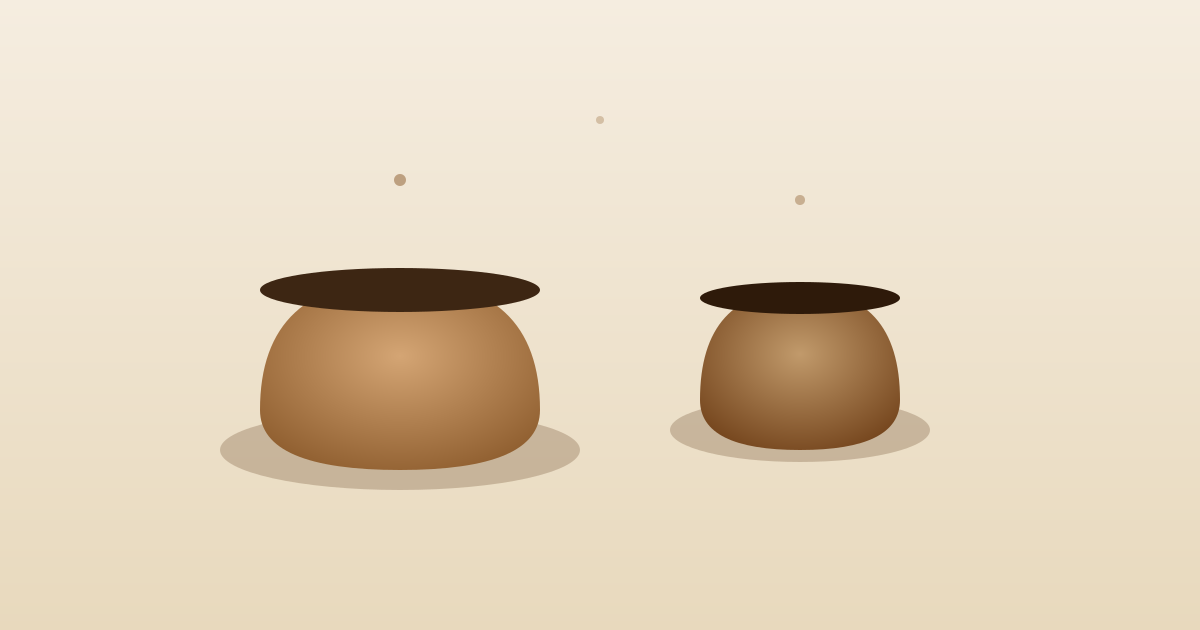
Crystal bowls come in a range of sizes, typically 6 to 20+ inches in diameter, with larger bowls producing lower tones. Each bowl is tuned to a specific note, and bowls are often sold as sets tuned to the notes of a scale (C, D, E, F, G, A, B).
Where they come from
The modern crystal singing bowl is a 20th-century development, not an ancient instrument.
Quartz crucibles were originally developed for the semiconductor industry as containers for growing silicon crystals at high temperatures. In the 1980s and 1990s, wellness communities began repurposing these crucibles as musical and contemplative instruments, marketing them alongside traditional Tibetan metal bowls despite their different origins.
Today, specialized manufacturers produce crystal bowls specifically for sound practice, with controlled tunings and finishes. The instrument is modern, but that does not make it less real or less useful — it is simply honest about the history.
How they sound
Crystal bowls produce a pure, sustained, single-note sound with relatively few overtones. The quality is sometimes described as:
- Ethereal
- Penetrating
- Clear
- Crystalline (literally)
This is quite different from the richer, more layered sound of metal Tibetan bowls. Neither is better — they are different sonic experiences. Many practitioners prefer one over the other; some use both.
A good way to decide: listen to recordings of both types on good headphones before buying. If one consistently draws you in more than the other, trust that preference.
What crystal bowls are marketed for
Crystal bowl sellers often attach specific claims to specific bowls:
- Bowls tuned to specific notes marketed as aligning to specific chakras
- Bowls marketed for specific emotional or physical effects
- Sets marketed as complete “healing systems”
These claims are not supported by peer-reviewed scientific research. The honest framing is that crystal bowls are beautiful contemplative instruments that produce sustained pleasant tones. Whether they produce specific therapeutic effects beyond general relaxation is an open question.
You can enjoy playing crystal bowls without accepting any of the larger claims. Many practitioners do.
Choosing one
If you are buying your first crystal bowl:
Start with one medium-sized bowl. 8-10 inches is a common starting point — small enough to handle easily, large enough to produce a resonant tone. You do not need a full set to start.
Pick a note that feels good. If you have no preference, C, F, or G are common starting tones that pair well with other common bowls.
Listen before buying when possible. Many specialty stores let you hear bowls in person. Online, look for sellers who include audio recordings of each specific bowl.
Budget reasonably. A quality starter bowl typically costs $80 to $250. Higher-priced bowls ($500+) can be beautiful but are not necessary for a beginner.
Check return policies. A bowl is a personal instrument. You want to know you can exchange it if the sound doesn’t work for you.
Caring for a crystal bowl
Crystal bowls are fragile. Practical tips:
- Store them on a padded surface
- Keep them away from edges where they could be knocked over
- Use only the recommended mallets (striking with a hard object can crack the bowl)
- Clean with a soft cloth; avoid abrasive cleaners
- Travel with them in padded cases only
A well-cared-for crystal bowl can last decades. A dropped one becomes expensive gravel.
Before investing
If you are on the fence about buying a crystal bowl, consider:
- Does your current practice feel limited by not having one? If a physical instrument would meaningfully change your practice, that is a good reason to invest.
- Are you buying it because of specific therapeutic claims? If so, reset expectations. The bowls are beautiful instruments, not medical devices.
- Have you tried recordings first? Many practitioners find that recorded bowl music works just as well for their home practice. You can always upgrade to a physical bowl later.
A desktop audio tool that lets you sample different tones and tunings can be a low-cost way to explore what appeals to your ear before committing to physical instruments. It is a useful step in deciding whether a specific bowl — and a specific note — is what you actually want.
Desktop Retuning Lab
We cite it when a story needs a heavier comparison bench rather than a quick consumer-facing demo.
If you want to compare the character of different bowl tones before buying, a desktop audio tool can help you sample frequencies and intervals so you can decide what appeals to you.Common reader questions
Are crystal singing bowls ancient?
No — the modern crystal singing bowl is a 20th-century development. Quartz bowls originated in the silicon industry (as crucibles for growing silicon crystals) and were repurposed for musical and contemplative use. Traditional Tibetan singing bowls are made of metal and have a much longer history.
Do crystal bowls sound better than metal bowls?
Neither is universally 'better.' Crystal bowls produce a purer, sustained single tone with fewer overtones. Metal bowls produce a more complex, layered sound with multiple overtones. Most people find one or the other more pleasant to their own ear — trust your own listening.
Are expensive bowls meaningfully better than cheap ones?
Quality matters, but price is not always a reliable guide. Some expensive bowls are overpriced; some affordable bowls are excellent. Listen before buying when possible, check return policies, and trust reviews from buyers who describe their actual listening experience.