Sound-based practices — calming music, guided meditations, singing bowl recordings — are commonly used as part of stress-relief routines. If you have been curious about whether they might help with everyday stress, here is a grounded overview of what is well-established, what is uncertain, and how to think about the options.
Important: This article is about general everyday stress and relaxation. It is not medical advice. If you are experiencing persistent or disabling anxiety that affects your work, sleep, relationships, or daily functioning, please consult a qualified mental health professional. Sound-based practices are a complement to care — not a replacement for it.
What reputable sources say
For general guidance on how music is studied in health contexts, the NIH’s National Center for Complementary and Integrative Health maintains a resource summarizing the research landscape. [VERIFY: confirm NCCIH music page content and specific conclusions.]
For broader guidance on relaxation approaches — including meditation, deep breathing, and guided imagery — the NCCIH also publishes an overview of relaxation techniques. [VERIFY.]
What the broader body of research generally supports:
- Slow, predictable music tends to have calming effects on the autonomic nervous system in controlled studies. This is not a fringe finding.
- Hospitals use music interventions in contexts like pre-surgery preparation and oncology care for their calming effects.
- Structured relaxation practices — of which sound-based listening is one form — are associated with modest improvements in perceived stress and relaxation for many people.
What is less well-established:
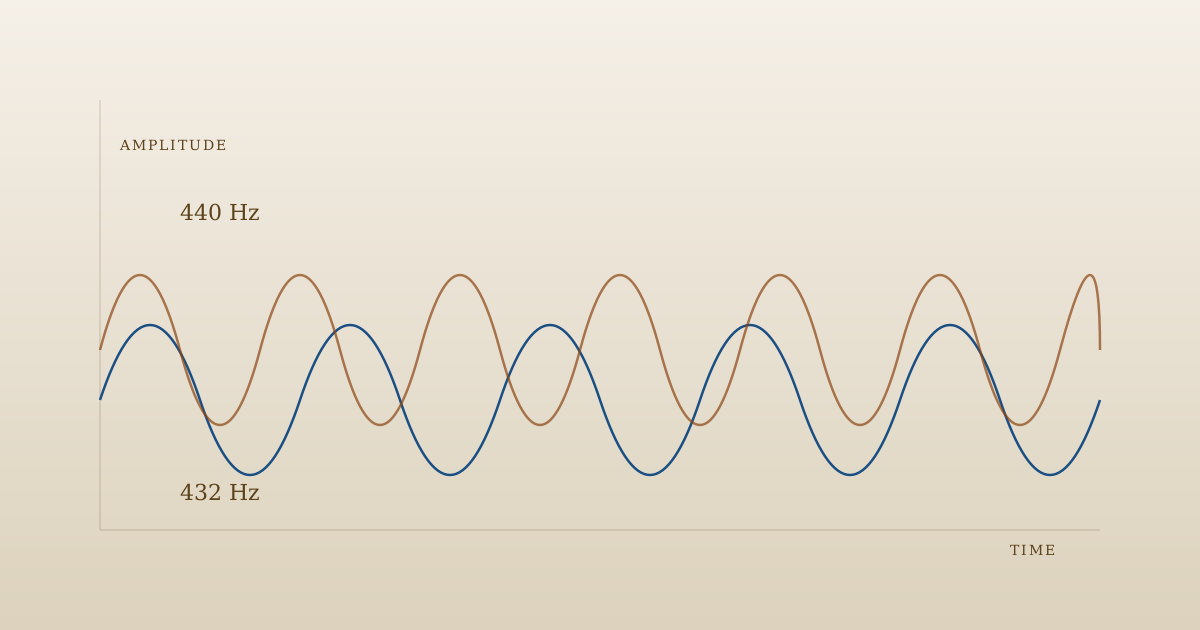
- Specific frequency claims (“528 Hz reduces cortisol”) are not supported by current research in any specific way.
- Large effect sizes from any single sound-based intervention.
- Universal recommendations — individual response varies significantly.
The honest framing
For everyday stress relief, a sound-based practice is most useful when framed as:
- A consistent listening routine you can do at home
- Part of a broader set of calming habits (sleep, movement, connection)
- A complement to other care, not a replacement
- Something you evaluate based on your own experience, not on specific health claims
Practical starting approaches
If you want to try a sound-based practice for everyday stress:
A 20-30 minute listening session two or three times per week. Find a calm, slow recording you enjoy. Lie or sit comfortably in a dim, quiet space. Do not check whether it is “working” — just listen.
A daily five-minute calm moment. Even a short listening session can reset your nervous system between activities. Many people find this more sustainable than longer occasional sessions.
Combined with existing habits. Sound-based practices work well as part of a routine — before bed, after work, in the morning — rather than as an isolated activity.
Live group experiences when possible. Community sound baths, meditation groups, or yoga studios that incorporate sound can add a social dimension that many find meaningful. These are a complement to, not a replacement for, consistent solo practice.
When to get professional support
Sound-based practices are a wellness tool, not a clinical intervention. If your stress is:
- Interfering with sleep consistently
- Affecting your work or relationships
- Accompanied by physical symptoms (chest tightness, digestive issues, persistent tension)
- Accompanied by low mood or hopelessness
…the right next step is a conversation with a doctor or licensed mental health professional, not a longer playlist. This is especially important for older readers, who sometimes resist seeking mental health support because it feels like an admission of decline. It is not. Seeking care is routine health maintenance, and it works alongside wellness practices rather than in place of them.
A practical note on tools
You do not need a subscription app to explore sound-based stress relief. A browser-based audio tool gives you access to experiment with different recordings, tunings, and ambient tracks without committing to a monthly bill. The practice matters more than the app.
The honest summary: find a calming listening routine you enjoy, do it consistently, combine it with good overall self-care, and talk to a professional if stress becomes significant. That combination — simple, sustained, unglamorous — tends to be what actually works over time.
YouTube Retuning Extension
We reference it when the article context is less about ownership and more about comparing recognizable songs already living online.
If you want to experiment with calming music and tuning under your own conditions, a browser-based audio tool lets you explore without an app subscription.Common reader questions
Can sound healing replace medication for anxiety?
No. Sound-based practices can complement other care but should not replace medication or therapy for diagnosed anxiety disorders. If you are considering changes to your care, discuss them with your prescribing doctor or mental health provider.
Does it matter what kind of music I listen to?
For general calming effects, slower-tempo, lower-pitched, predictable music tends to feel more relaxing to most listeners than stimulating or unpredictable music. The specific frequency labels typically matter less than the actual sonic character.
Are live group sessions better than recordings?
Both can be helpful. In-person group sessions add a social and environmental context that many find meaningful. Recordings are more accessible and can be used consistently at home. The two are not mutually exclusive.