Tuning forks are among the most accessible instruments in modern sound practice. They are portable, affordable, easy to use, and produce a clean predictable tone. If you have seen them in sound healing videos or yoga studios and wondered what they actually do, here is an overview.
What a tuning fork is
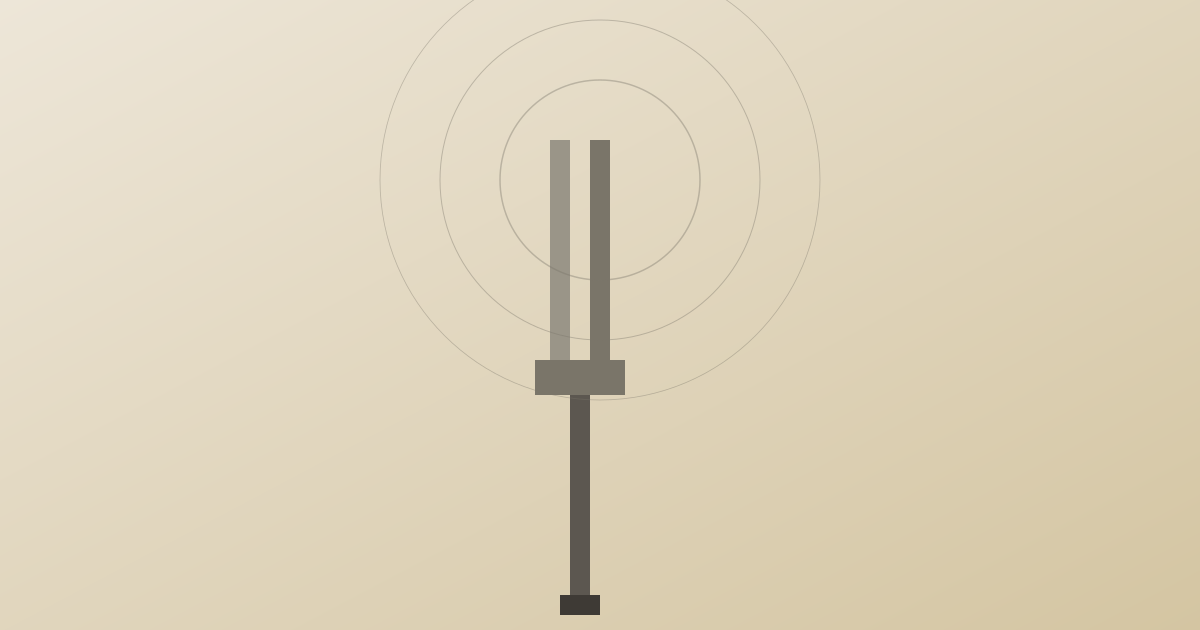
A tuning fork is a two-pronged metal instrument that, when struck, vibrates at a specific frequency to produce a pure tone. Tuning forks have been used for centuries to tune musical instruments. In modern sound practice, weighted tuning forks — tuning forks with metal weights on each prong — are used as a contemplative and body-focused instrument.
The weights slow the vibration, producing a deeper tone that lasts longer and can be felt more strongly in the hand or through the body.
What a session looks like
A typical tuning fork session includes some combination of:
- Ambient use — the practitioner strikes the fork and holds it near your ears, allowing you to hear the sustained tone fade
- Body-applied use — the practitioner gently places the stem of the fork against specific bones (sternum, collarbone, top of the head) so the vibration transmits through the body
- Guided listening — the fork is used at specific moments during meditation or breathwork
Sessions typically last 30 to 60 minutes. You lie down or sit comfortably. The practitioner works through different forks, different locations, and different durations.
The experience is usually described as calming, grounding, or focused. Some people feel a mild physical sensation where the fork is applied; others feel mainly the sound.
What the evidence supports
Tuning forks produce real, measurable sound and vibration. That much is not in question. What is less well-established:
- Specific therapeutic claims tied to specific frequencies (for example, that a 128 Hz fork applied to a joint produces specific healing effects)
- Claims about effects on “energy systems,” chakras, or cellular functions
- Claims that specific frequencies correspond to specific organs or body parts
Peer-reviewed research on tuning forks specifically is limited. The broader research on music, relaxation, and vibration-based practices suggests general calming effects for many listeners, but this is not the same as validating specific claims.
The honest framing is that tuning forks are pleasant, calming contemplative instruments. Whether they produce specific therapeutic effects beyond general relaxation is an open question.
Common fork types and their marketing
You will see tuning forks marketed in several categories:
Standard musical tuning forks (not weighted) — used to tune instruments. Not typically used for contemplative practice.
Weighted tuning forks — the standard for sound practice. Produce a longer, stronger vibration.
Solfeggio-tuned forks — tuned to the modern Solfeggio frequencies (174, 285, 396, 417, 528, 639, 741, 852, 963 Hz). Marketed with specific emotional or therapeutic claims that are not well-supported.
Planetary-tuned forks — tuned to frequencies marketers associate with planetary orbits (Sun, Moon, Earth, etc.). Marketed with astrological or cosmic framing.
Chakra-tuned sets — tuned to frequencies marketers associate with specific chakras.
The different tunings do produce different tones — that part is real. The specific therapeutic or cosmic claims attached to them are marketing language, not peer-reviewed research.
How to try it at home
If you want to try a simple home practice:
Get one or two weighted tuning forks. A C-note (128 Hz) and a G-note (192 Hz) are common starter choices. A starter set from a reputable vendor costs $30-90.
Find a quiet window of 10-20 minutes.
Strike the fork gently against a rubber mallet or the palm of your opposite hand. Avoid striking it on hard surfaces that can damage it.
Hold the fork near each ear, about 4-6 inches away, and listen to the sustained tone fade.
For a body application, gently place the stem of the fork on your sternum or on the top of your head. Notice the physical sensation as the vibration fades.
Repeat as part of a short meditation — not as a treatment, but as a contemplative practice.
What this practice is for
The honest framing:
- It is a way of giving yourself a focused, calm moment
- It is a portable practice you can do anywhere
- It is satisfying in the way ritual can be satisfying
- It may support general relaxation
It is not:
- A treatment for any medical condition
- A substitute for healthcare
- A cure for chronic pain, anxiety, or any other clinical problem
Before buying
If you are on the fence, a desktop audio tool that lets you play specific frequencies is a low-cost way to sample what different tones feel like to your ear before buying physical forks. That can help you decide whether you actually want the physical instrument or whether the audio experience alone is what appeals to you.
Desktop Retuning Lab
We cite it when a story needs a heavier comparison bench rather than a quick consumer-facing demo.
If you want to sample different tones and intervals before buying physical forks, a desktop audio tool lets you hear specific frequencies and decide what appeals to your ear.Common reader questions
What does tuning fork therapy actually do?
A weighted tuning fork, struck once, produces a pure tone and a gentle vibration. Held near the ears, it provides a calming auditory experience. Held against bone (like the sternum or collarbone), you can feel the vibration physically. The experience is typically calming and focused. Specific therapeutic effects beyond relaxation are not well-established in research.
Is it safe?
For most people, tuning forks used at reasonable volume and gentle pressure are a low-risk practice. Avoid striking forks loudly near the ears, applying them to injured areas, or using them over recent surgery sites. If you have any medical concerns, check with your doctor.
Do I need expensive tuning forks?
Starter sets are affordable ($30-90 for one or two weighted forks). Specialized 'chakra-tuned' or 'Solfeggio-tuned' sets can cost hundreds, but the specific frequency claims attached are not well-supported by research. A simple weighted fork is enough to try the practice.