
My husband Frank is a retired structural engineer. For most of the forty-three years of our marriage, he has been good-naturedly skeptical of anything in the wellness world. Yoga was something other people did. Meditation was for people with too much time. When I tried a sound bath at our local studio in 2022 and came home enthusiastic, he asked, kindly, whether they had charged me extra for the gong noises.
I am not telling this story to defend his skepticism or to ridicule it. Frank is a careful person. He looks at things, he thinks about them, and he forms opinions based on what he has actually seen. That is how he was as an engineer and that is how he is at sixty-eight. The story is just about what happened when he saw something different.
The cardiologist’s list
In late 2023, Frank’s annual checkup turned up a blood pressure reading he could not ignore. His cardiologist gave him a one-page handout of lifestyle changes to try before considering medication: more walking, less alcohol, a different breakfast pattern, and a stress-reduction practice. The handout listed several stress reduction options, including yoga, meditation, breathing exercises, and “evening listening to calming music or recorded soundscapes.”
Frank looked at the handout for a long minute and then said, “Apparently I have to try the gong noises after all.”
It is hard to overstate how much the cardiologist’s mention of it mattered. Forty years of my suggesting calmer evening practices had produced exactly nothing. One sentence on a doctor’s printed handout reframed the same idea as a clinical recommendation. He started the practice the next week.
What he actually did
Frank is a structural engineer by training. He approached sound listening the way he would approach any new system: with one variable changed and everything else held constant.
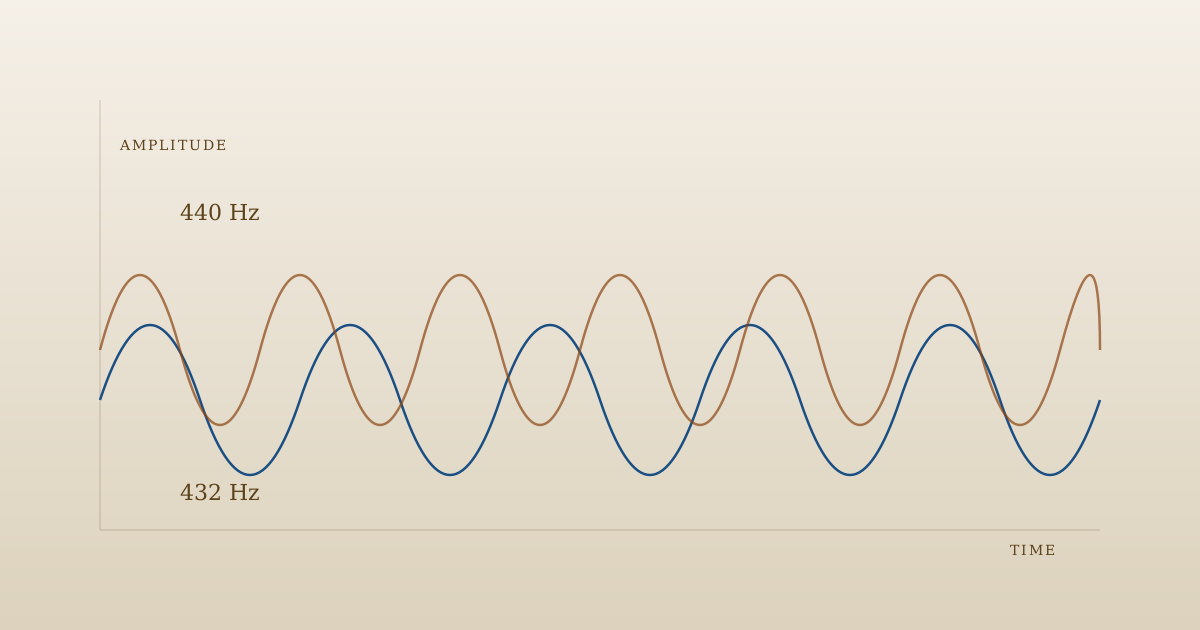
He picked a single 25-minute recording of slow piano music in 432 Hz tuning, downloaded it to his phone, and committed to playing it through over-ear headphones every evening at 9 PM in our reading chair. He used the same recording every night for the next four months. He did not rotate. He did not experiment. He did not check whether it was “working.”
He simply did the thing the doctor’s handout recommended, in the most engineering-minded way possible.
What changed
By the third week, his evening mood had clearly shifted. He was less sharp at the end of the day. The hour after his session was quieter than it had been in years. By the second month, his sleep onset had improved and he was waking less often during the night.
His blood pressure measurements at home showed slow, modest improvement. By the four-month checkup, his readings were in a range the cardiologist was comfortable with, alongside the weight he had lost and the walking he had added. The doctor did not attribute the change to any single piece. He attributed it to the combination.
What was clear in our house was that the evening listening had become a non-negotiable part of his day. He has not missed a session in over a year now.
What he still does not believe
Frank does not believe that 432 Hz is special. He does not believe in chakras, energy fields, or vibrational alignment. He has read enough about Solfeggio frequencies to be even more skeptical than he was before. When friends ask him about the practice, he says, “I listen to slow music for twenty-five minutes before bed. It helps me calm down. The doctor told me to do it.”
I have stopped trying to convince him of anything more. He is right that he does not need the spiritual framework to get the benefit. The structured calm is doing the work. Whether the frequency choice contributes anything additional is, by his own admission, “probably small if it does anything at all, but I am not going to mess with what is working.”
This is the most pragmatic engineering response to sound healing I have ever encountered. It also happens to align with what the honest research seems to support.
What I have learned watching him
Frank’s experience has changed how I think about sound healing as a household practice. The framing matters enormously. The same activity can be unbearable to a skeptic when presented as energy work and welcome to the same skeptic when presented as evening calm time.
For older couples where one partner is curious and the other is skeptical, the lesson may be: the skeptic does not need the spiritual framework. They might even be put off by it. The practice itself is what matters. Let them have whatever language for it makes them comfortable.
Frank still calls his evening session “the slow music thing.” He still rolls his eyes if I describe it as anything else. He has also done it 380 nights in a row.
That is what success in sound healing actually looks like for a lot of older readers. It is not a transformation. It is a small, sustainable habit that supports a slightly calmer life. Whatever you call it, that is enough.
“He still says he does not believe in any of "that energy stuff." He just thinks the listening helps him calm down. I am not going to argue with him about labels.”
What changed in their household
- The cardiologist's recommendation provided permission for trying it that years of his wife's suggestions had not.
- A simple evening routine — a single recording, the same time each night — was easier to sustain than he had expected.
- Blood pressure measurements showed modest improvement over four months, alongside other lifestyle changes.
- The biggest shift was not in his readings but in his evening mood and sleep onset.
Apple Music Retuning Tool
It tends to appear in stories about low-friction listening rather than technical experimentation.
For readers who want to try the same kind of evening routine on Apple Music, a retuning tool can simplify the process of finding and comparing calm tracks.Common reader questions
Was the sound listening the main reason for the blood pressure change?
Almost certainly not. He also lost some weight, reduced alcohol, and started walking more. The listening was one part of a broader routine. The doctor was clear that the combined effect mattered more than any single piece.
What did he listen to?
A single 25-minute recording of slow piano music in 432 Hz tuning. He used the same recording every night for the entire four months. He found the consistency comforting.
Did he start to believe the spiritual claims?
No, and the practitioner who recommended the framing did not push him to. He framed it for himself as "calming down before bed with structured music." That worked for him.